



The first few weeks at a new school can feel unfamiliar to your child, even if they’ve been looking forward to starting. You can help them adjust by talking about what to expect, practicing simple routines, and keeping goodbyes consistent. Some children settle in quickly, while others need more time and reassurance. Giving your child space to adjust while staying connected with their teachers can make the experience easier for both of you.
Prepare Your Child Before the First Day
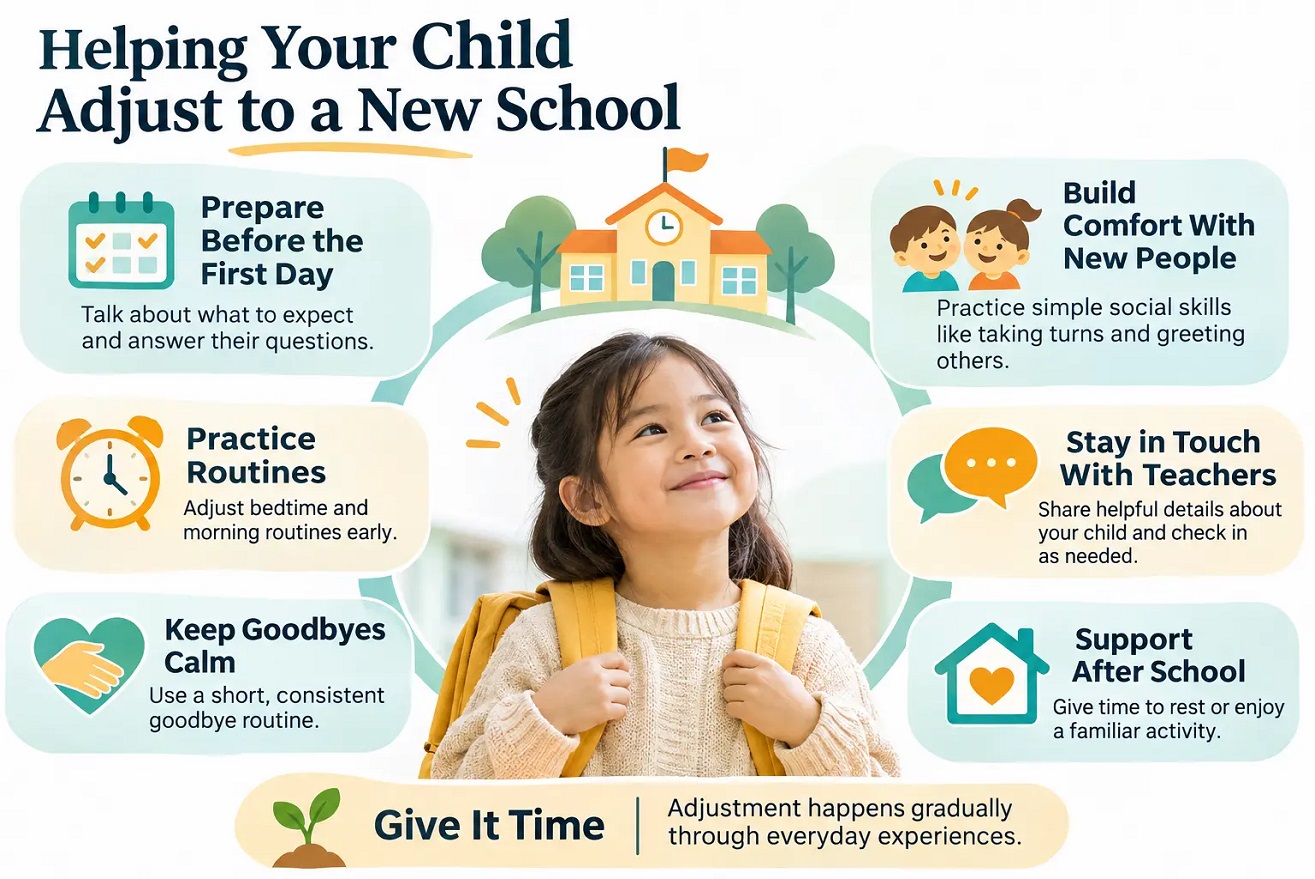
Children often feel more comfortable with changes when they have some idea of what to expect. Before school begins, talk about everyday experiences such as meeting teachers, spending time with classmates, and participating in classroom activities.
Keep explanations simple and appropriate for your child’s age. Younger children may enjoy reading stories about starting school or pretending to be in a classroom. Older children might have specific questions about their schedule, new classmates, or what they’ll be learning.
You can also involve your child in small preparations, such as choosing a school bag or organizing their belongings. These activities give them something familiar to focus on as the first day approaches.
Practice Familiar Routines at Home
A predictable morning can help reduce unnecessary stress. Start adjusting bedtime and waking schedules before school begins, especially if your child is used to a different routine.
Practice getting dressed, eating breakfast, and preparing school belongings without rushing. Younger children may need help completing these tasks, while older children can gradually take on more responsibility.
Keeping mornings manageable gives you more time to respond calmly when your child needs reassurance.
Make Goodbyes Calm and Predictable
Saying goodbye can be difficult when children are still getting used to a new environment. Your child may cling to you, become quiet, or cry at drop-off. These reactions can happen even when they’re beginning to enjoy their time at school.
A short, consistent goodbye routine can help your child understand what happens next. You might offer a hug, say when you’ll return in terms they understand, and let their teacher help them join an activity.
Try to follow through with the goodbye once you’ve said it. Repeatedly leaving and returning may make the separation more confusing.
What If Your Child Cries at Drop-Off?
Acknowledge how your child feels without making promises you cannot keep. You might say, “I know you wish we could stay together. I’ll be back after school.”
Ask the teacher how your child behaves after you leave. Some children settle into activities once the morning transition is over, while others need more support. Understanding what happens during the rest of the day gives you a clearer picture than drop-off alone.
Help Your Child Feel Comfortable With New People
Meeting unfamiliar teachers and classmates can take time. Some children enjoy making friends immediately, while others prefer watching activities before joining.
You can practice simple social interactions at home through play. Taking turns, asking to join an activity, and greeting someone by name are useful skills to introduce without putting pressure on your child.
It also helps to understand how the school welcomes new students. Part of choosing a Montessori school is learning how teachers introduce classroom routines and help children become comfortable with unfamiliar surroundings. Knowing what to expect allows you to talk about those experiences with your child before the school day begins.
Give Your Child Time to Build Trust
Children may show growing comfort in small ways. Your child might begin mentioning a classmate, talking about an activity, or greeting a teacher more willingly.
Notice these changes without expecting steady progress every day. It’s common for children to have easier mornings followed by more difficult ones as they adjust.
Keep Communication Open With Teachers
You know your child’s habits, interests, and concerns better than someone meeting them for the first time. Sharing useful information with their teacher can help them understand what makes your child comfortable.
For example, you might explain that your child needs extra time to approach unfamiliar activities or prefers quiet reassurance when upset.
Ask about their participation during the school day. Are they beginning to interact with classmates? Do they seem interested in activities? Are there particular moments when they need additional encouragement?
Keeping these conversations focused on what teachers observe can help you work together when challenges arise.
Support Your Child After School
Adjusting to a new school can be tiring. Your child may spend much of the day following unfamiliar routines, meeting people, and learning classroom expectations.
Allow some time to rest or enjoy a familiar activity after school. Not every child will want to talk about their day immediately, especially younger children who may have difficulty describing their experiences.
Rather than asking several questions at once, try something specific:
- “What did you enjoy doing today?”
- “Was anything difficult?”
- “Who did you spend time with?”
If your child doesn’t have much to say, that’s okay. They may share more while playing, drawing, or spending quiet time with you later.
Know When Your Child Needs More Support
Every child’s adjustment period is different. Their age, personality, previous school experiences, and changes at home can all influence how they respond.
Occasional difficult mornings are common, but pay attention when distress continues, becomes more intense, or begins affecting sleep and everyday activities.
Talk with your child’s teacher about what they’re noticing at school. Sharing observations from home and the classroom may help you understand whether particular situations are causing difficulties.
If concerns persist or interfere with your child’s daily life, consider speaking with a qualified pediatric professional for guidance.
Give Your Child Time to Settle In
Becoming comfortable at a new school usually happens through small, everyday experiences. Recognizing a familiar face, remembering a routine, or feeling confident enough to try an activity can all be signs that your child is finding their place.
The people guiding your child during these moments matter, too. Patient teachers who understand children’s different needs can help make unfamiliar experiences feel more manageable.
At Liberty Montessori School, we understand that children may need different amounts of time to become comfortable in a new setting. with others and build confidence.
Our programs include learning opportunities for different developmental stages, recognizing that children’s abilities and interests change as they grow.
At Liberty Montessori School, we welcome questions from parents who want to understand what their child may experience in a new learning environment. If you’re preparing your child for this change and would like more information, you can get in touch with us to ask about our available programs.
Leave a Reply