


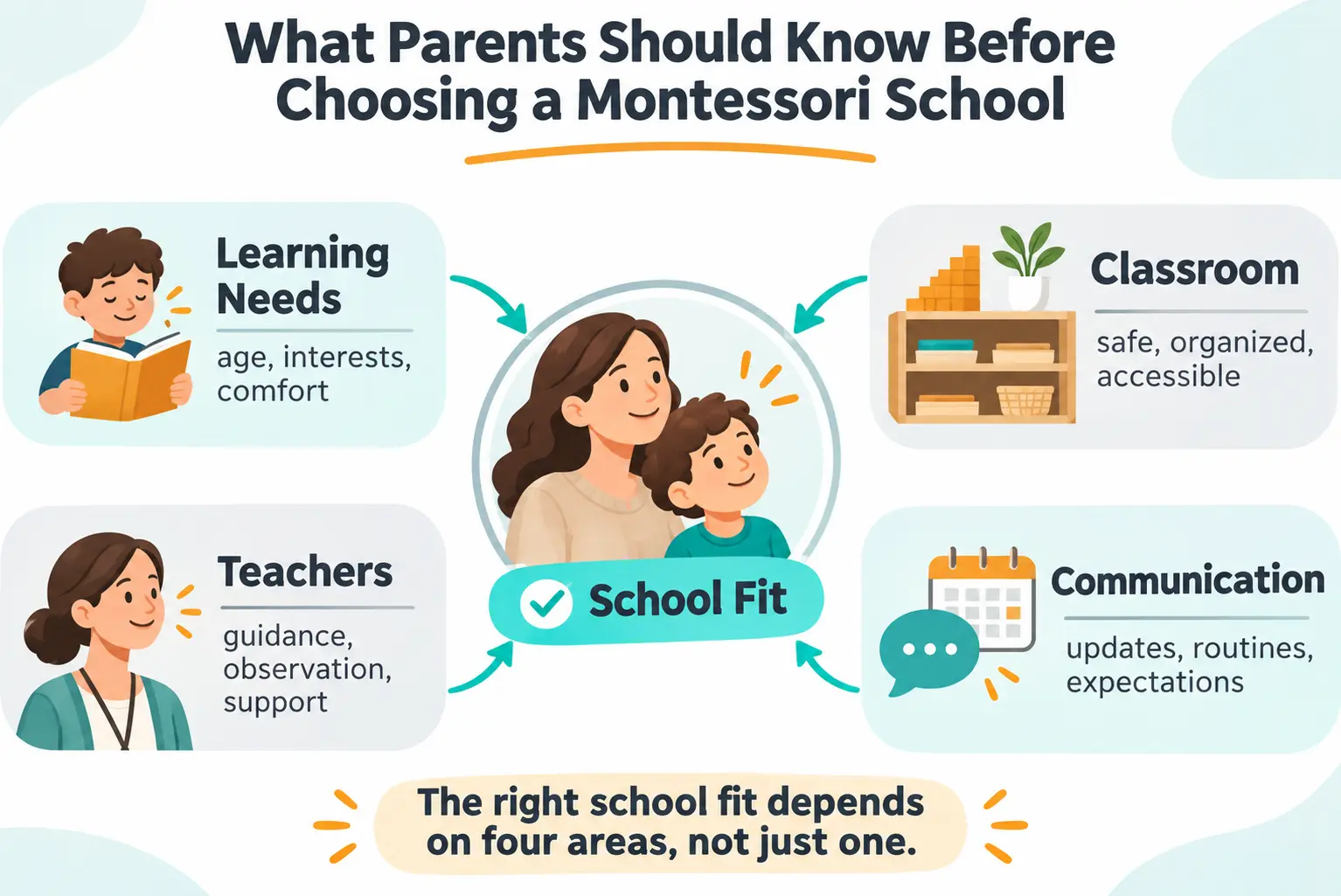
Choosing a school for your child starts with understanding how they learn, what kind of support they need, and whether the classroom feels right for them. A Montessori school should give children opportunities to explore, practice independence, and learn with guidance from their teachers. Knowing what to look for in daily activities, teaching practices, and communication with parents can help you make a decision that feels right for your family.
Understand How Children Learn in Montessori Classrooms
Montessori education encourages children to learn through exploration and hands-on activities. Instead of having everyone complete the same task at the same time, teachers guide children as they work with materials suited to their abilities and interests.
For example, younger children might practice sorting objects, matching shapes, or completing simple tasks such as putting materials away. Older children may work with activities involving numbers, language, and problem-solving. Children have opportunities to repeat activities as they become more comfortable with new skills.
Understanding the Montessori learning approach can help you recognize why classrooms emphasize hands-on activities, independent exploration, and guided learning. Teachers observe how children use materials and step in when they need direction or help with something unfamiliar.

As you research schools, consider how these ideas appear in the activities they describe. Ask how children choose their work, how teachers introduce new lessons, and what happens when a child needs additional guidance.
Consider Your Child’s Learning Needs
Every child approaches learning differently. Some enjoy joining group activities right away, while others prefer watching before participating. Your child’s age, interests, and comfort with unfamiliar surroundings can help you understand what kind of classroom support they may need.
Learning needs also change as children grow. Younger children may spend more time practicing communication, movement, and everyday routines. As they develop, activities can introduce more involved problem-solving, academic concepts, and opportunities to take responsibility for their work.
When reviewing a school’s programs, think about whether the activities match your child’s current abilities while giving them room to try something new. You can also ask how teachers adjust their guidance when children need more time to understand an activity or are ready for a different challenge.
At Liberty Montessori School, we recognize that children have different interests and develop at their own pace. Our programs include hands-on learning opportunities for children at different developmental stages, allowing them to explore new skills with guidance and encouragement.
Look for a Safe and Supportive Classroom Environment
A classroom should give children space to participate comfortably in daily activities. Montessori environments typically have organized shelves, accessible materials, and designated areas where children can work individually or with classmates.
As you learn about a school’s facilities, ask how classrooms are arranged and how materials are selected for different ages. Safety, supervision, and cleanliness deserve attention, especially when considering programs for younger children.
Notice How Children Interact With Their Surroundings
Everyday classroom routines can tell you a lot about how children learn responsibility. A child might select an activity, work with the materials, and return everything to its proper place before moving on.
These small tasks help children become familiar with classroom expectations. They also give teachers opportunities to observe how children manage activities independently.
Think about your child’s personality as you consider the environment. A child who takes time to feel comfortable may need additional reassurance, while another may benefit from guidance when learning to wait, share materials, or participate in group activities.
Ask About Teachers and Classroom Guidance
Teachers influence how children experience school, especially when they’re learning to manage unfamiliar situations. In Montessori classrooms, educators prepare activities, observe children’s progress, and help them work through challenges.
Ask about the teachers’ qualifications, classroom experience, and approach to individual learning needs. It can also help to understand how they introduce new activities and respond when a child feels frustrated or needs additional support.
Pay attention to how the school describes relationships between teachers and children. Patient explanations, respectful communication, and consistent expectations can help children feel more comfortable asking questions or trying something unfamiliar.
A school’s teaching philosophy should also be reflected in its daily practices. Understanding how educators guide children can give you a clearer picture of what your child may experience throughout the school day.
Understand Communication and Daily Expectations
Good communication makes it easier for parents to stay involved in their child’s education. Knowing what happens during the school day can help you understand your child’s progress and recognize areas where they may need encouragement at home.
Before enrolling, ask how teachers share updates about classroom activities and developmental progress. Find out whom you should contact when questions arise and how the school handles concerns about learning or behavior.
Daily routines are another consideration. Children often become more comfortable when they know what to expect during arrival, classroom activities, and transitions between tasks.
If your child has difficulty adjusting to changes, ask how teachers introduce routines and help children settle into the classroom. Understanding these practices can make it easier to prepare your child for a new school experience.
Questions Parents Should Ask Before Enrolling
You don’t need to know everything about Montessori education before choosing a school. Asking a few practical questions can help you understand whether its approach suits your child.
How Does the School Support Different Learning Needs?
Ask how teachers recognize children’s abilities and provide guidance when activities become challenging. Find out how they respond when a child needs extra practice or is ready for something more advanced.
What Activities Will My Child Experience?
Look for examples of activities appropriate to your child’s age. Ask how children practice language, problem-solving, movement, and everyday responsibilities during the school day.
How Do Teachers Communicate With Parents?
Find out how often families receive updates and how they can discuss concerns with teachers. Knowing how communication works can help you feel more prepared once your child begins attending.
How Can I Tell Whether the Environment Suits My Child?
Think about your child’s interests, comfort level, and learning habits. Consider how the school’s routines and teaching practices might support those needs. You can also ask how teachers help children become familiar with new classmates and classroom expectations.
Make a Choice That Feels Right for Your Family
After gathering information, give yourself time to consider what matters most for your child. Think about how the school approaches learning, how teachers guide children, and whether its daily routines fit your family’s needs.
It may help to write down any remaining questions, especially about how your child would be supported during their first weeks. Having clear answers can make the decision easier without feeling pressured to settle everything at once.
At Liberty Montessori School, we believe children learn best when they feel supported and have opportunities to explore at their own pace. Our dedicated faculty guide children through hands-on experiences while encouraging independence, curiosity, and participation in daily learning.
Choosing a school is a big decision, and you deserve to feel comfortable with your choice. If you have questions about how our school may fit your child’s needs, contact us so we can help you understand your options.
Leave a Reply